The daily commute is broken. We’re all tired of packed trains, rising fuel prices, and bus journeys that take an hour to go three miles. Electric scooters have exploded in popularity as the logical, adult-sized solution to that “last mile” problem. They are fun, fast, and cheap to run.
But when you start shopping, you hit a wall: price. The big-name brands can cost £500, £800, or well over £1,000. Then, you see a brand like iScooter offering what looks like the exact same thing for a fraction of the cost, often under £300. The immediate question is, “What’s the catch?” Is this a genuinely smart buy, or a cheap toy that will fall apart after a month? We dug into the brand to find out.
A Quick Guide to the iScooter Lineup
- The i9 & i9max: This is the all-rounder and bestseller. It’s a lightweight, foldable scooter with app control, solid range, and a decent motor. It’s the go-to choice for a first-time buyer.
- The i10 Series: This is the long-range model. It features a larger battery and 10-inch honeycomb tyres, making it better for covering longer distances on private land or for a more comfortable ride.
- The iX Series (iX4, iX6): These are the “off-road” models. With more powerful motors, dual suspension, and chunky tyres, these are built for fun on dirt tracks and uneven terrain, not for portability.
- Kids’ Electric Scooters: A range of smaller, speed-limited models for children, perfect for use in the garden or at a park.
First, The Legal Warning You Need to Hear

Let’s get the big, unavoidable disclaimer out of the way. As of right now, it is illegal to ride a privately owned e-scooter on public roads, cycle lanes, or pavements in the UK. The only place you can legally ride your own e-scooter is on private land with the landowner’s permission.
The rental scooters you see in cities (like Lime, Voi, or Dott) are part of government-approved trials and are a separate legal category.1 If you buy an iScooter, you are buying it with the legal understanding that it’s for private use. Many people use them for fun on private estates, caravan parks, or large properties.
So, Where Does iScooter Fit in a Crowded Market?

The e-scooter market is split into three tiers. At the top, you have the premium brands like Pure and Segway, known for robust waterproofing, powerful motors, and high-end battery cells.2 At the bottom, you have unbranded, no-name scooters from marketplace sites, which are a total gamble.
iScooter Global has positioned itself as the “value leader.” They are not trying to be the best scooter in the world; they are trying to be the best scooter for the price.
They do this by focusing on features that matter to the average user. You get a solid aluminium frame, app connectivity (to lock the scooter and change modes), bright LED lights, and a disc brake. These are features that, just a few years ago, were only available on mid-range models. They skip the expensive marketing campaigns and brick-and-mortar shops, focusing on a direct-to-consumer online model that keeps prices low.
A Closer Look at the i9max: The People’s Champion

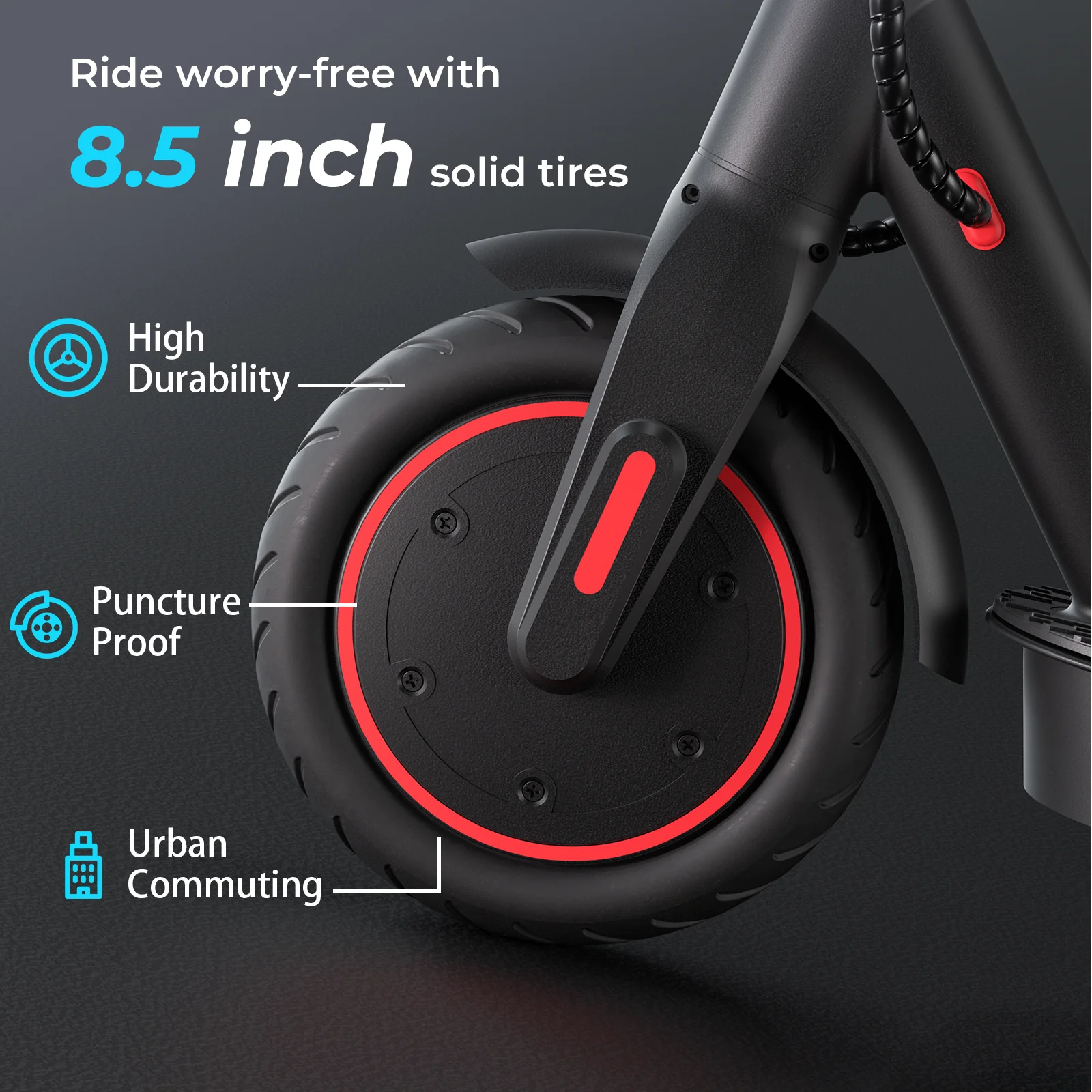
Let’s look at their most popular model, the i9max. Out of the box, the build quality is surprisingly good. The folding mechanism is simple and locks securely, which is crucial for safety and for carrying it. The ride is what you’d expect from a scooter in this class: the solid honeycomb tyres mean you’ll never get a puncture, but you will feel the bumps more than you would with air-filled (pneumatic) tyres.
The 500W motor is zippy on flat surfaces and will handle slight inclines with no problem. The “max range” is listed at around 30-35km. A savvy user knows to take this with a grain of salt. This is a range tested in “eco mode” with a very light rider on a perfectly flat surface. A more realistic, real-world range is probably 60-70% of that, so expect 20-25km. For the price, that’s still an impressive capability.
What Do You Really Give Up for the Low Price?
This is the most important question. To sell a scooter at this price, compromises have to be made. It’s important to be realistic about what they are.
First, hill-climbing power. While the i9max is fine for small hills, it will struggle on a steep, sustained incline, especially with a heavier rider. If you live at the top of a massive hill, you may need to look at more powerful (and expensive) dual-motor models.
Second, water resistance. The scooters are rated at IP54. This means they are “splash-resistant,” not “waterproof.” They can handle a damp pavement or a small puddle, but you absolutely should not be riding one in a heavy downpour. This is a fair-weather machine, a rule that honestly applies to most e-scooters.
Finally, long-term battery health. While the battery works great, the cells inside are likely not from a premium brand like Samsung or LG. This means that after a few hundred charge cycles, you may notice the battery life starting to degrade faster than it would on a £1,000 scooter. This is a normal trade-off for the lower initial cost.
Who Should Buy an iScooter?
After looking at the features, the price, and the compromises, the picture is clear. The iScooter range is not for the hardcore, all-weather, daily-commute “power user” who needs a machine to do 20 miles a day over steep hills.
It is, however, a fantastic choice for a few specific people. It’s for the beginner who wants to try out e-scooters without a huge financial risk. It’s for the person who lives on a caravan park or large private property and wants a fun, easy way to get around. It’s for the parent looking for a high-quality, safe electric scooter for their kids to use in the garden. For what you pay, you are getting a surprisingly capable, well-built machine with modern features. It’s a “smart buy,” as long as you understand its limits.